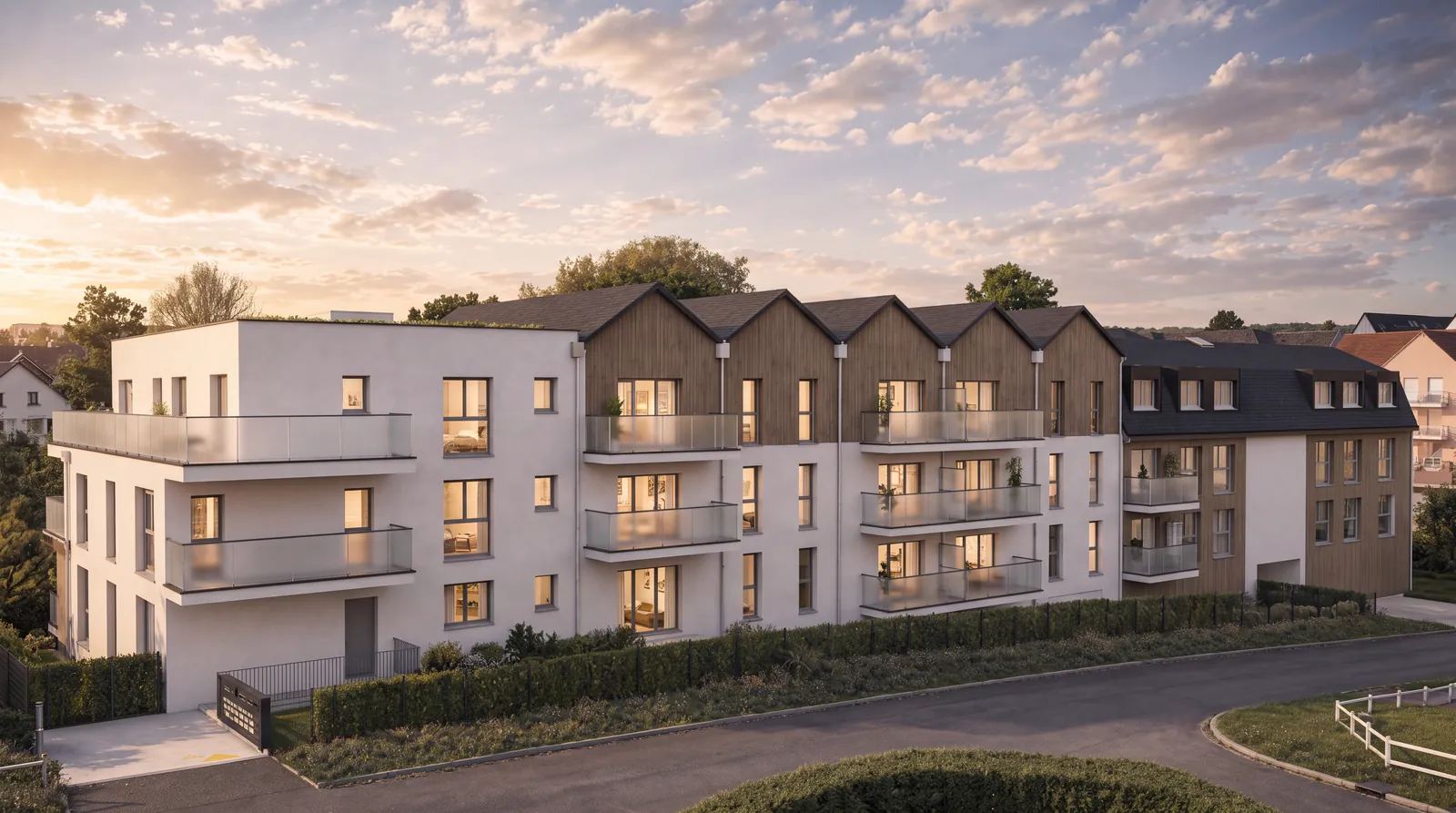
People speak of "notaire's fees", but most of this amount does not go to the notaire (French conveyancing solicitor): these are taxes collected at the time of the sale. And on new-build, they are considerably lower.
Why it costs less on new-build
On older property, the buyer pays high transfer duties. On new-build, the price already includes VAT, and the registration duties are reduced. The rest of the fees, the notaire's remuneration and the disbursements, varies little from one case to another.
The result: a commonly used order of magnitude is 2% to 3% of the price on new-build, against 7% to 8% on older property.
The gap, in an example
That €10,000 is not tied up at purchase: it is a deposit preserved, or an amount less to borrow.
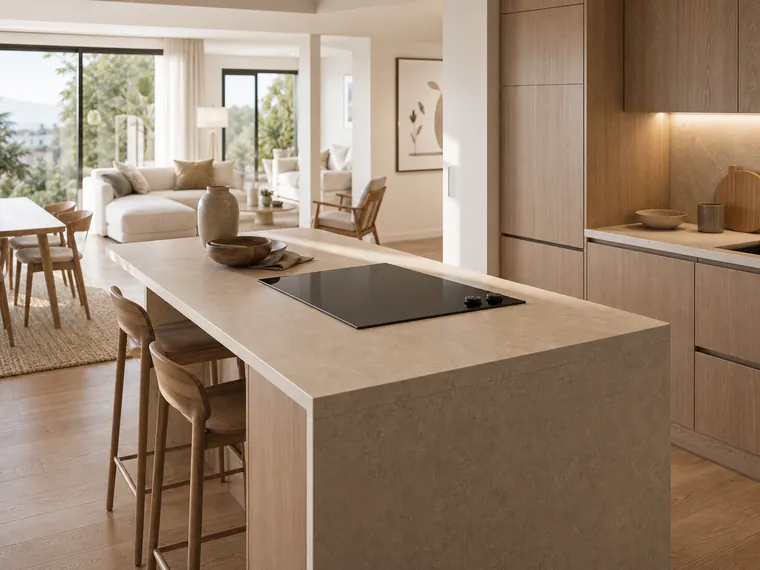
What you save on fees goes into the home itself.
Work out my financingHow to find out the exact amount
The exact amount depends on the price, the financing (the loan-related costs are added) and the notaire. The notaire gives it to you before signing. For a first estimate, our calculators include notaire's fees estimated at 2.5% of the price.
Compare new-build and older property on your price →
The other advantages of new-build at purchase
- No renovation work to plan for: you move into a finished home.
- A possible property tax exemption in the first few years, depending on the commune.
- Payment in step with the construction, and not all at the signing.
- The guarantees of an off-plan purchase (VEFA), up to ten years after completion.
Indicative orders of magnitude, not advice: only the notaire sets the exact amount.
A project in Stella-Plage?
Two minutes to arrange an appointment: at the sales office, by video call or by telephone.