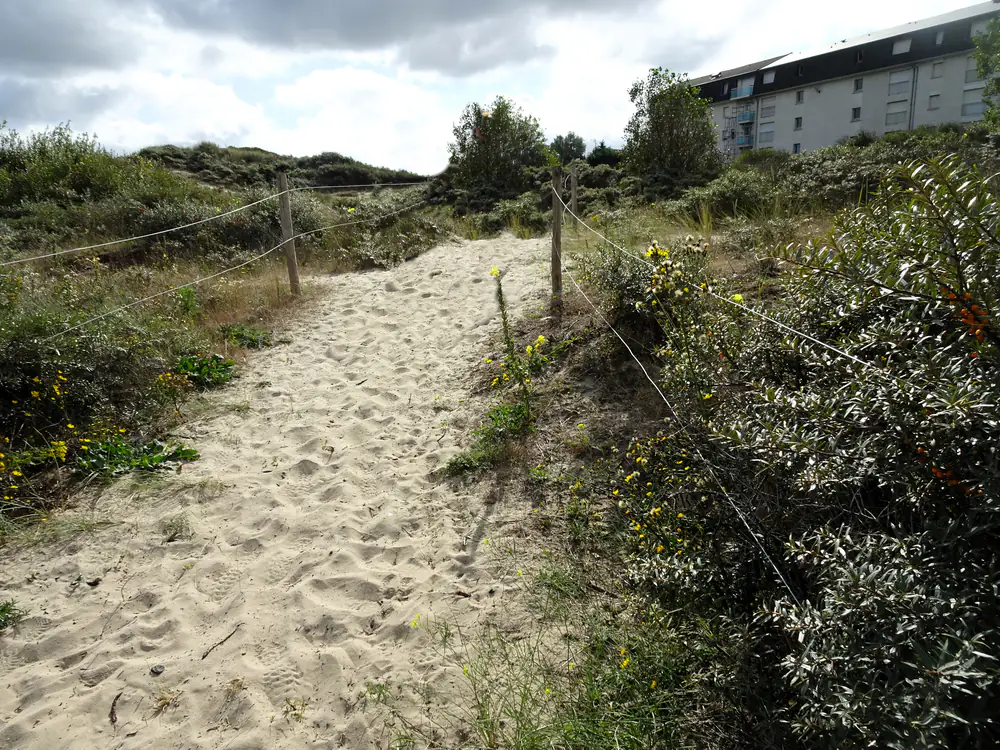
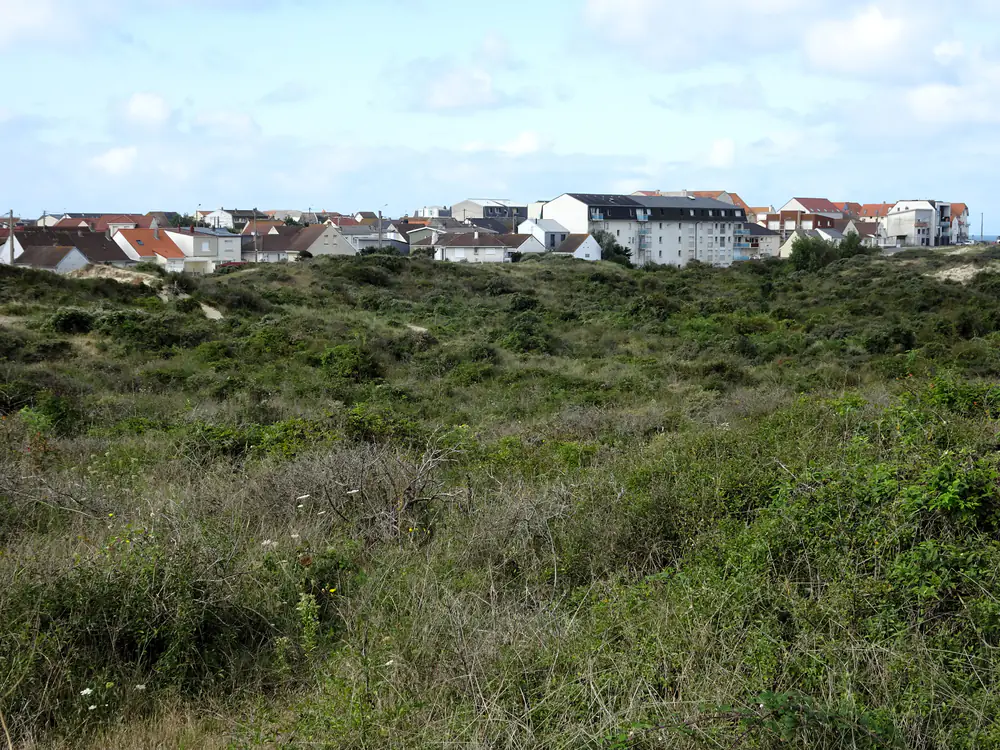
Behind the last row of houses begins a dune system with 259 protected hectares. A waymarked trail crosses it, starting in Stella and coming out at Merlimont. Two and a half kilometres, an hour, and a landscape you would never guess at from the seafront.
Where it starts
The trail has two entrances, one on the Stella side, the other on the Merlimont side. It is a loop: you can go in and come back out the same way, or cross from one town to the other.
Allow 2.5 kilometres and about one hour of walking. The ground is sandy and undulating, which is why the tourist office rates it as intermediate. Dogs are welcome, on a lead.
Three forms of dune, in order
Walking inland from the sea, you cross the three states of a dune ridge. The embryo dune comes first, the youngest, where the sand is only just catching on the first tufts. The white dune comes next, still mobile, held by marram grass. The grey dune comes last, fixed, covered in mosses and lichens, where the ground has become real soil.
These wide dunes have a regional name: they are called Picardy dunes. The trail crosses several of them, with a viewpoint opening onto the sea and a boardwalk through the undergrowth.
What lives there
The tourist office names three signature species of the site: the crested lark, a small bird with a recognisable song that likes bare ground, the blackcap, and the grayling, brown and unobtrusive, a species of dry habitats.
On the plant side, there is the heath dog-violet and the sea holly, the blue thistle of the dunes, protected and not to be picked.
You also come across goats and sheep. They are not there by chance: grazing stops scrub from closing the dune over, which would cost it its open flora.
Around it: the state biological reserve
The trail runs alongside a larger whole, the state biological reserve of the Côte d'Opale, created in 1985 and managed by the French national forestry office. Around 500 plant species, some forty of them protected regionally and seven nationally, have been recorded there.
For a longer walk, the GR 120, the coastal path, follows the shore and links the neighbouring resorts on foot.
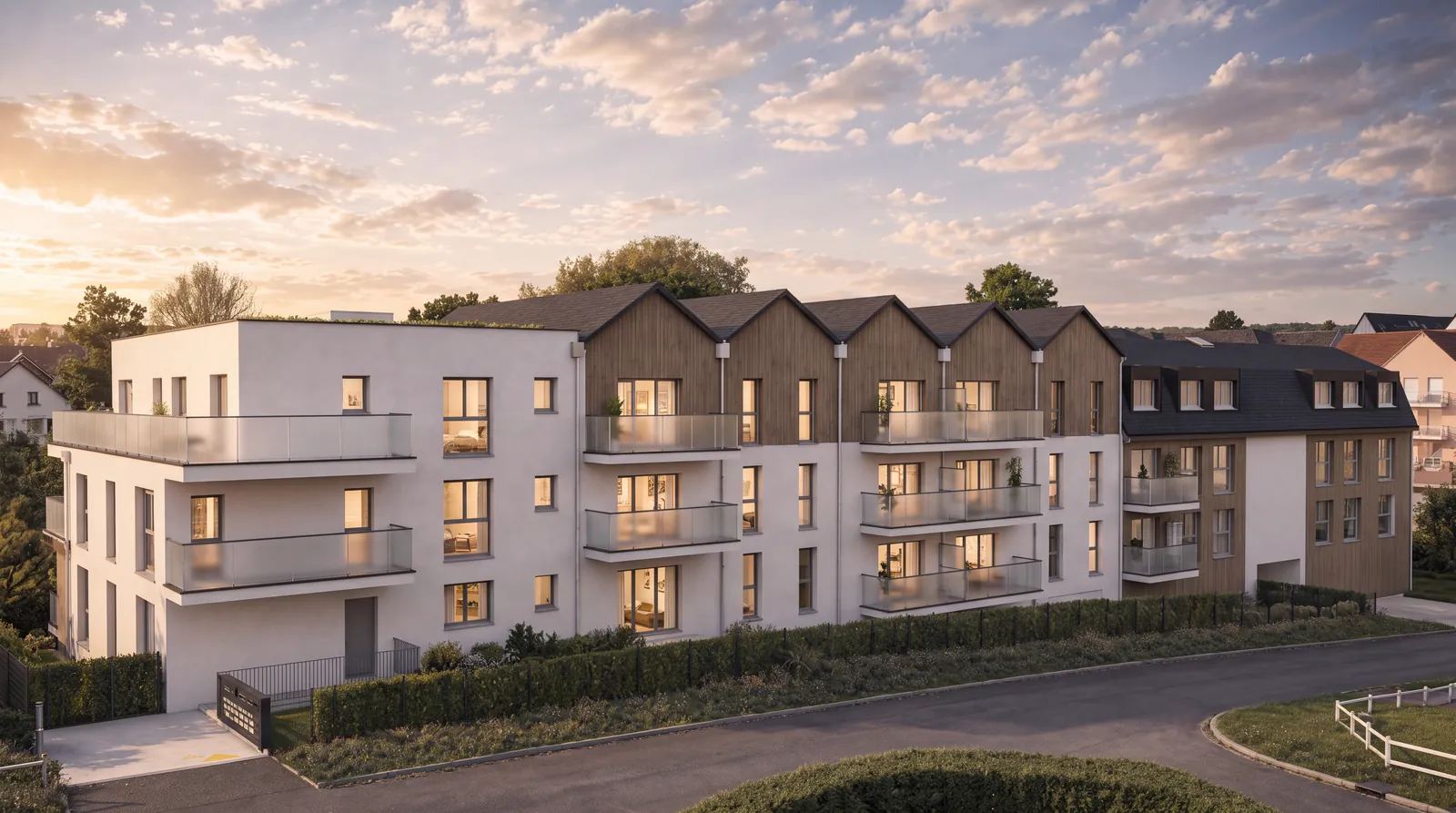
The pine forest, the dunes and the sea start at the end of the street.
Get the brochureIn practice
The trail is open all year and needs no special kit beyond closed shoes: the sand gets everywhere. Stay on the waymarked paths, as grey dune takes decades to recover where it is trampled.
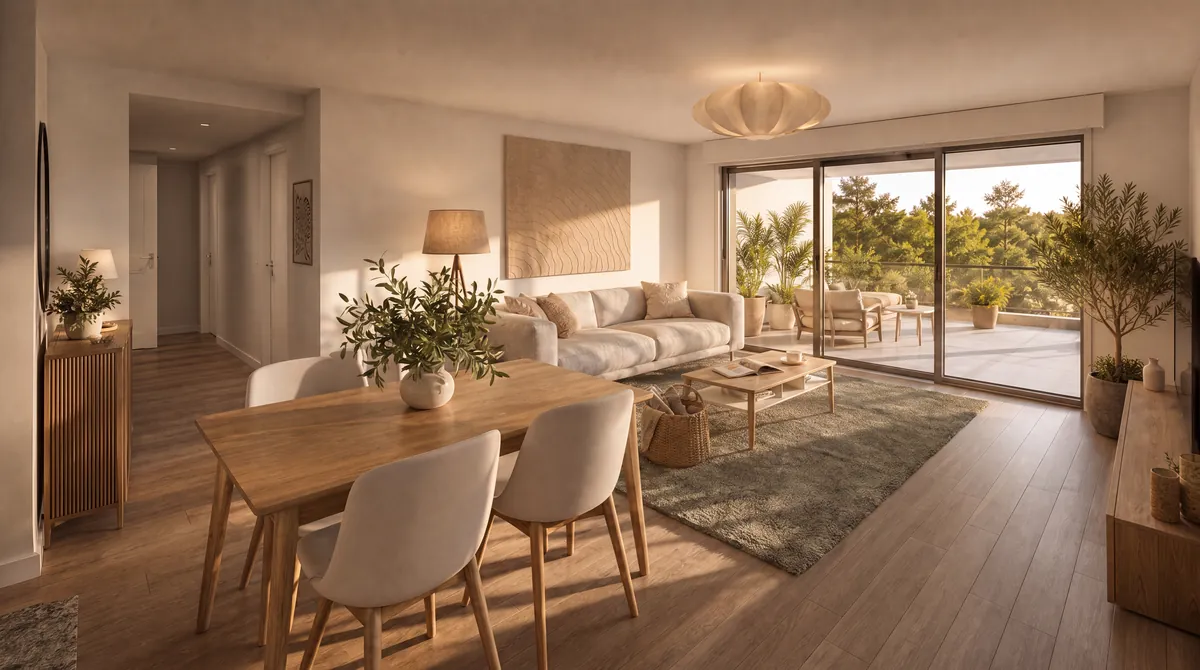
From The Swell it is an end-of-day outing: you set off on foot, walk the loop and come home. No car, no parking space to find.
Sources: route, wildlife and plants: Montreuillois en Côte d'Opale tourist office · state biological reserve of the Côte d'Opale: French national forestry office · protected dune area: town record.
Header photograph: Pierre André Leclercq, CC BY-SA 4.0, via Wikimedia Commons.